
P451, Memorial Hospital, 1904
The primary health facility for central Alberta started as the Red Deer Memorial hospital. In 1900, local residents wanted to honour three men who had died during the Second South African War, and a fundraising campaign was launched. Construction started thanks to community pledges, large donors including Lord Strathcona, and a loan from the Victorian Order of Nurses (VON), who obliged the hospital to hire its nurses as part of the donation. In the end, the board of directors did not raise enough money, so the Town of Red Deer stepped in to complete the project.
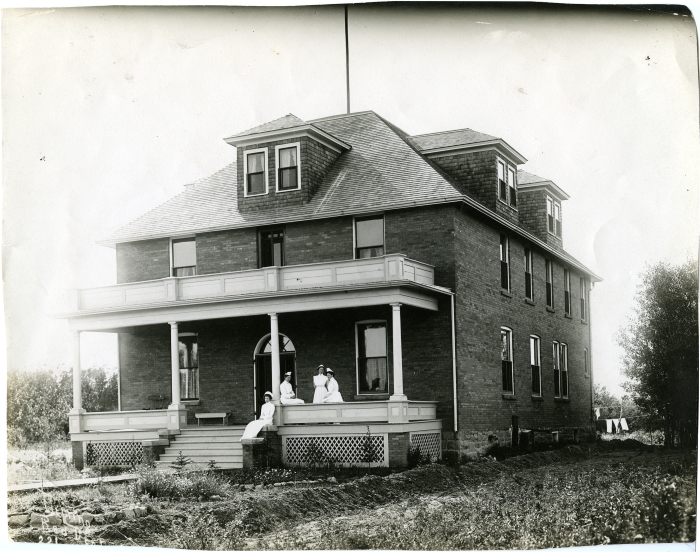
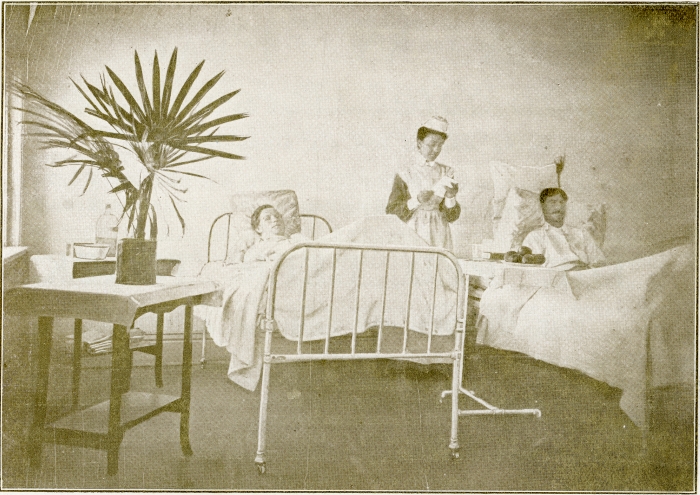
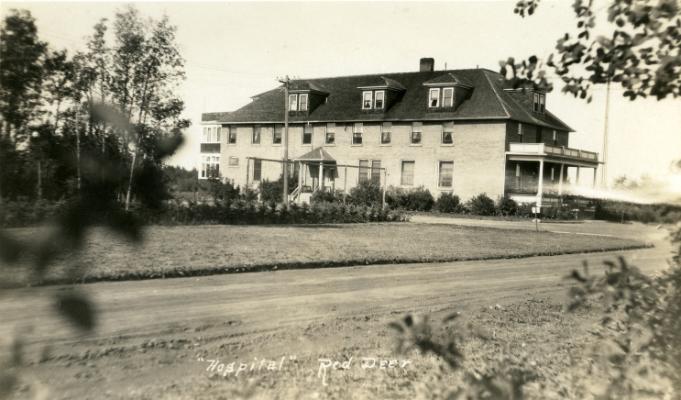
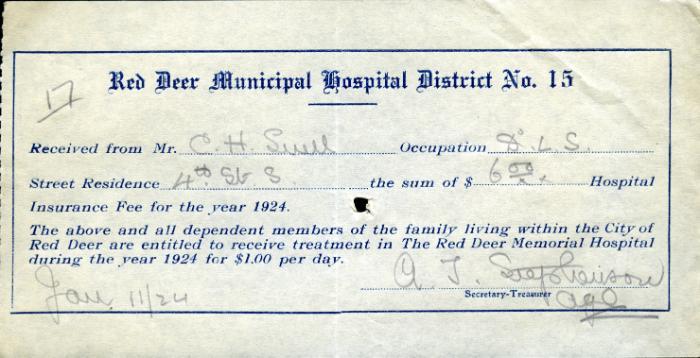
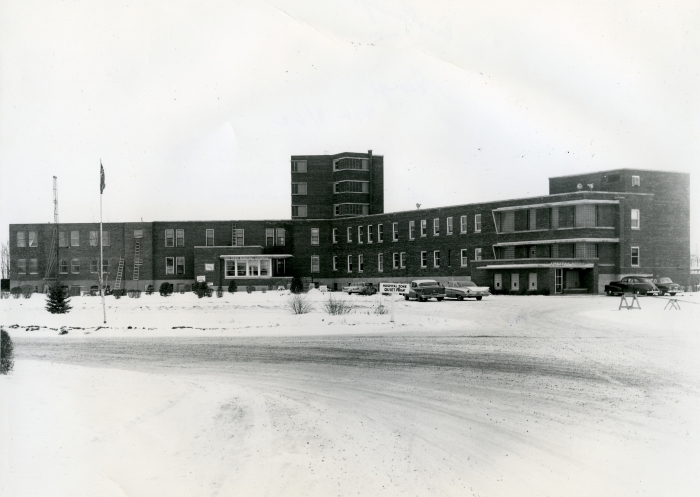
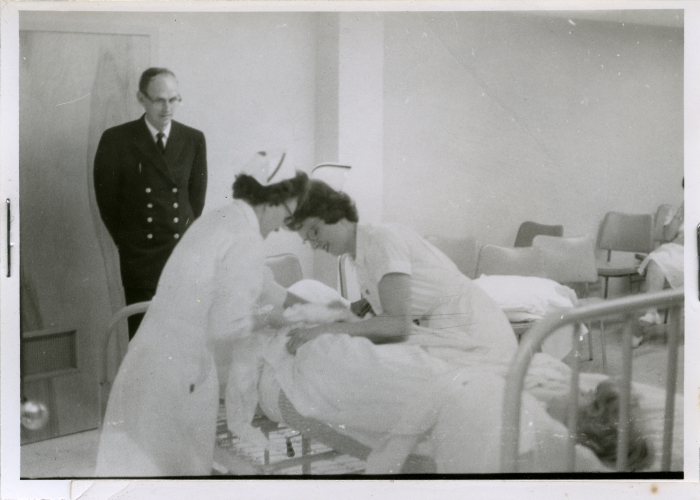
Red Deer Municipal Hospital (1923-1965)
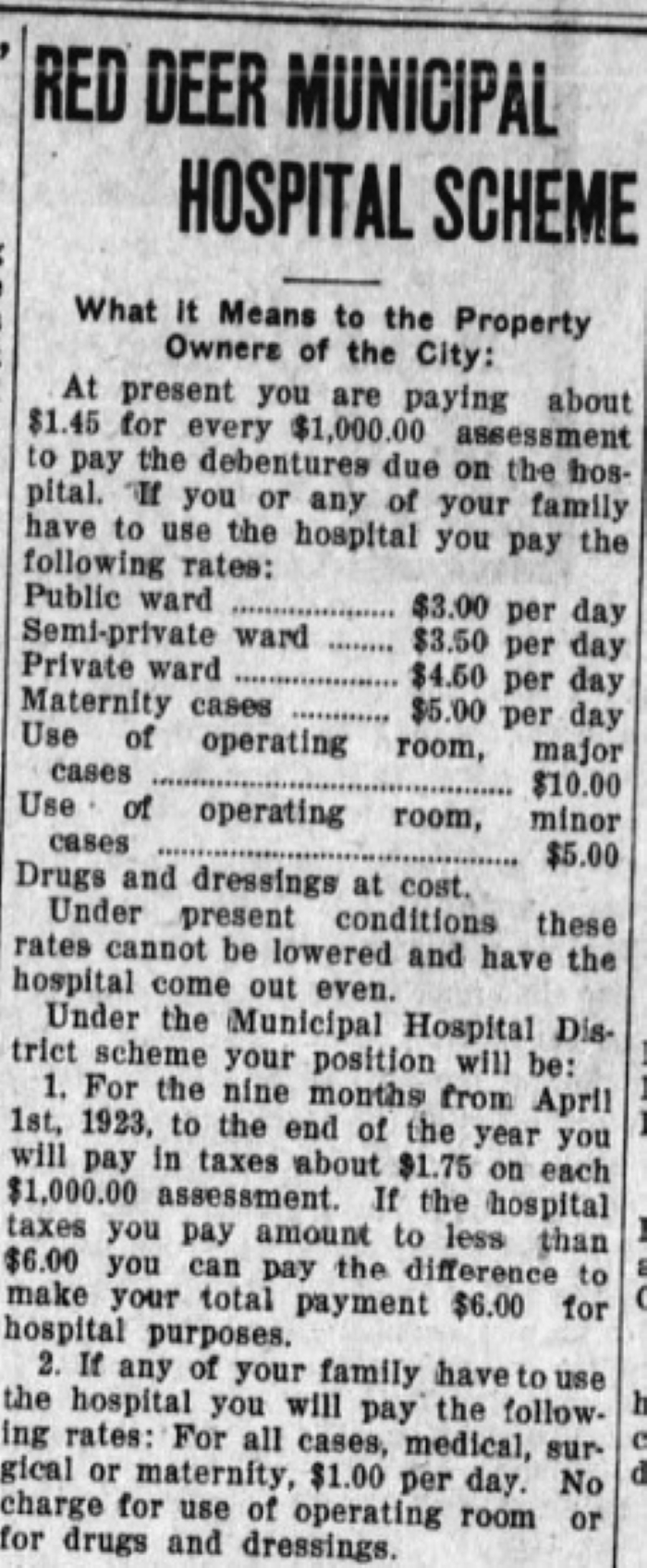
In the spring of 1923, the hospital facility was transferred from the City of Red Deer to the newly created Red Deer Municipal Hospital District No. 15, at which point it was renamed the Red Deer Municipal Hospital. This shift changed the funding model: instead of relying solely on city residents and patients, the hospital became supported through tax levies from surrounding communities, including North Red Deer, Penhold, Rocky Mountain House, Delburne, and Sylvan Lake, as well as surrounding counties, and was managed by a board
While the Red Deer Municipal Hospital District was concerned with the treatment of current symptoms, during the early 1930s there was a shift to preventative healthcare. In June 1931, the Red Deer Full-Time Health District was organized and comprised of the municipalities of Lorne, Golden West, Crown, Arthur, and Pine Lake; the towns of Lacombe and Innisfail; the City of Red Deer; and the villages of Blackfalds, Penhold, Eckville, North Red Deer, Bowden, Sylvan Lake, and Bentley.
As the population expanded, so did the need for health services. This district provided a wide range of proactive public health services including educational programs, sanitary inspections, medical examinations, communicable disease control, immunization programs, child hygiene initiatives, laboratory and clinical work, toxoid treatments, and tuberculosis control. The establishment of this district brought full-time preventative healthcare services, previously available only in larger centres, to rural areas and smaller communities.
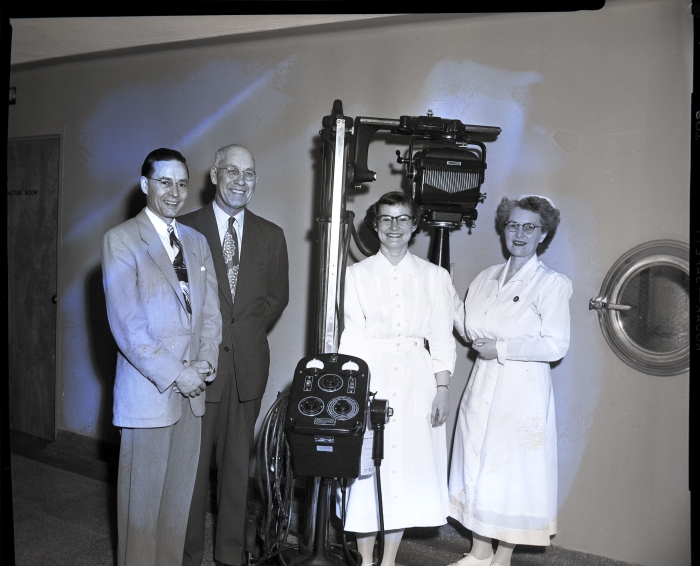
The Red Deer Municipal Hospital had more renovations completed in 1939, 1952, and 1956, where new hospital wings, a third storey to house a nurses’ residence, and a separate boiler plant building were all added to better serve the growing community and its surrounding area. A north wing was built in 1960 to accommodate additional medical units, while the east complex housed the nursing residence, which remained in use until it was demolished in the fall of 2003.
Red Deer Regional Hospital Centre (1977-Present)
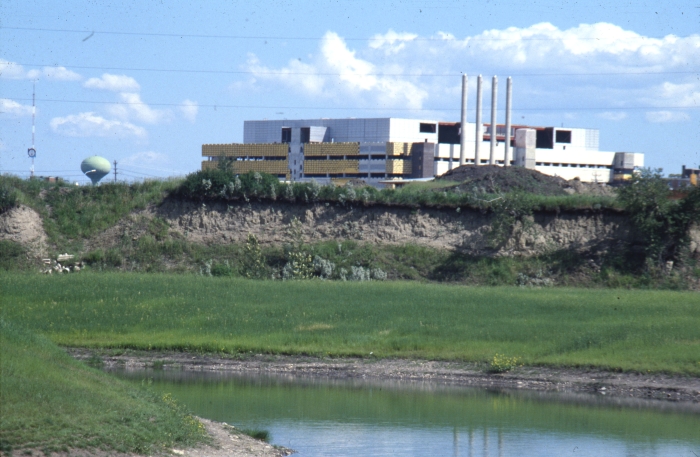
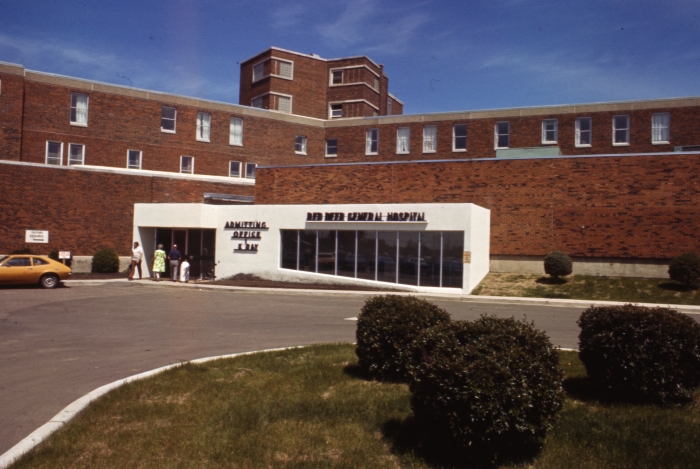
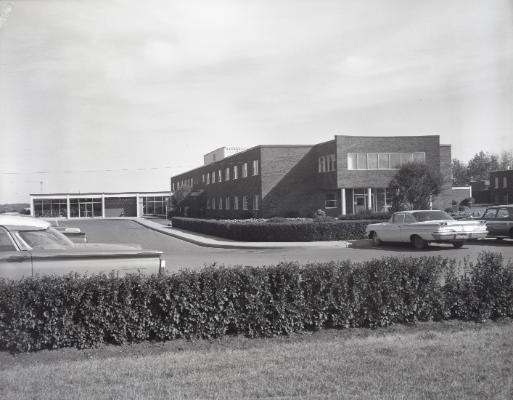
In 1977, the Red Deer General Hospital was transformed into the Red Deer Regional Hospital Centre after being designated a regional healthcare facility. A major milestone followed on April 30, 1977, when sod was turned for a new $43 million hospital north of the existing building. In preparation for the new facility, volunteers for the Dr. Richard Parsons Auxiliary Hospital and the Women’s Auxiliary to the Red Deer General Hospital merged in 1980 to coordinate fundraising.
The Red Deer Regional Hospital Centre officially opened on February 19, 1981, replacing the older general hospital structures.
In 1986, several major improvements were made. The hospital installed Alberta’s first CT scan unit outside of Calgary or Edmonton, making advanced imaging more accessible locally. That same year, new surgical equipment was introduced, allowing more procedures to be performed in Red Deer rather than requiring travel to larger centres. Additionally, an assisted unit was opened, expanding treatment options for patients with kidney disease.
Over the late 1980s and early 1990s, the Twilight Homes Foundation donated over $160,000 to the Red Deer Regional Hospital Centre to support new equipment, programs, and expanding services. Through these contributions, the hospital was able to acquire specialized urology equipment such as a phaco-emulsifier and lithotripter, establish a Cardiac Telemetry Unit, and purchase infusion pumps for the cancer centre. Their support also helped develop key programs, including the Outpatient Cardiac Rehabilitation Program, a three-month program where patients worked with physiotherapists, dietitians, and occupational therapists. In addition, funding provided in the early 1990s enabled the introduction and expansion of laparoscopic (minimally invasive) surgery, allowing hundreds of gallbladder procedures each year to be performed without traditional open surgery, greatly improving recovery times and patient outcomes.
This movement toward regional organization continued, and in 1994, following a major provincial initiative, Red Deer’s healthcare facilities and services were placed under the authority of the David Thompson Health Authority, marking a new phase in centralized healthcare administration across the province.
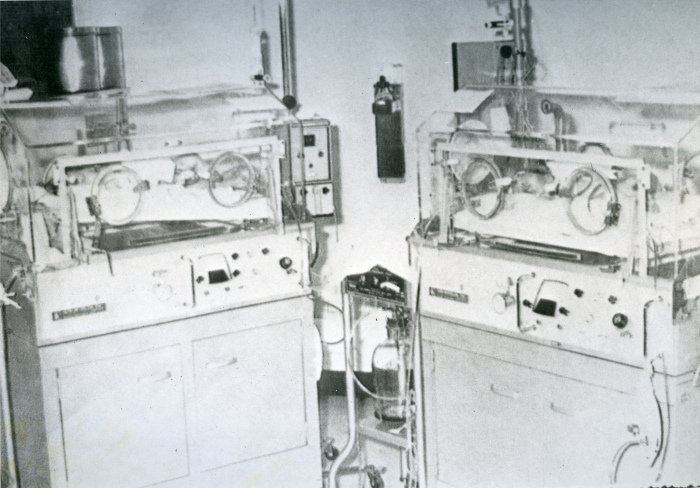
By 1995, with all these advancements, the Red Deer Regional Hospital Centre had evolved into a large, modern healthcare facility providing a wide range of services. On an average day:
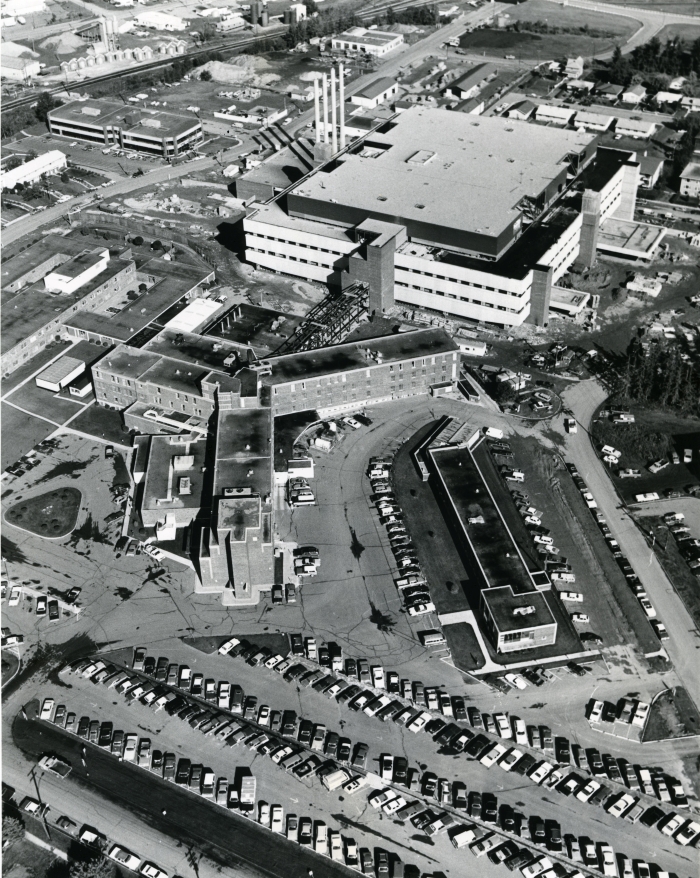
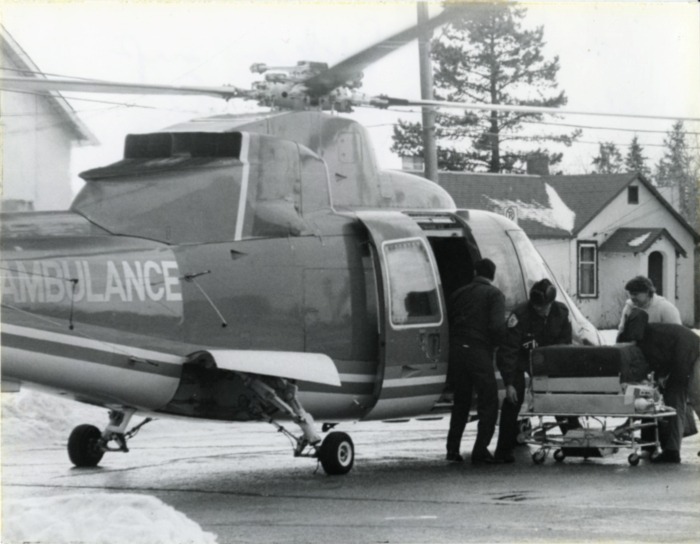
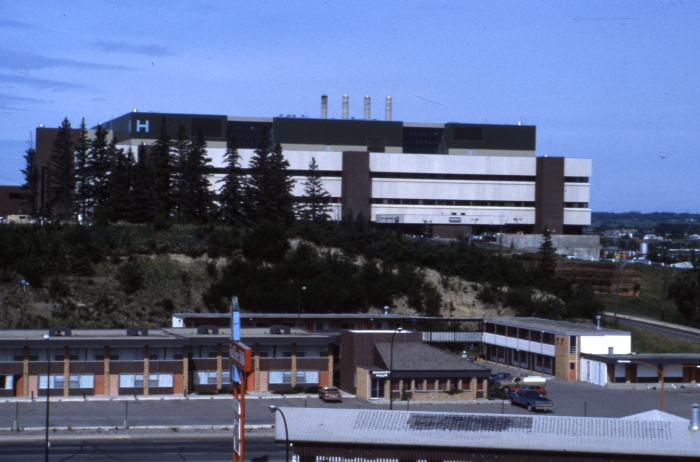
As modernization continued, older buildings were gradually removed: the main portions of the old hospital were demolished in 2005 after the new wing was completed, and the Dr. Richard Parsons Auxiliary Hospital—by then a 100-bed long-term care facility—was demolished in the fall of 2004, with the site converted into a parking lot.
In 2008, the David Thompson Health board was dissolved, and the Red Deer Regional Hospital was placed under the authority of one “superboard”, shifting from a separated regional health board to a unified provincial management.
In 2024, the Red Deer Regional Hospital Centre started a major redevelopment that reflects its continued role as a key hospital in central Alberta. A $1.8 billion Government of Alberta expansion project is currently underway and expected to end in the early 2030s, involving both the construction of a new patient tower and renovations to the existing hospital building. The redevelopment will add approximately 200 inpatient beds, six new operating rooms, two cardiac catheterization laboratories, an upgraded Medical Device Reprocessing Department, and a new central power plant. It also includes the construction of a separate ambulatory care building to provide outpatient services.