Urban Forest Fire Mitigation underway in The Pines
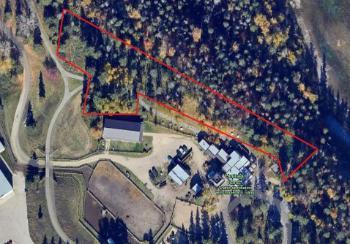
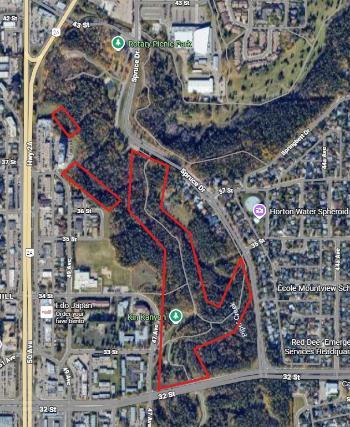
Urban Forest Fire Mitigation work is now underway on City-owned land in The Pines and is expected to continue through December 2026, depending on weather and ground conditions.
This work is part of The City’s ongoing effort to reduce wildfire risk in targeted areas of the urban forest. Crews are working to reduce wildfire fuel, improve access for crews and support the long-term health of the urban forest.
Some property owners whose homes back onto City land in The Pines received a letter from The City this summer. A door knocker will also be delivered to affected properties in the coming weeks as a reminder of the work happening, the timelines and what residents need to do.
If you received a letter from The City
If you received a letter, your property backs onto City land included in this year’s work area.
Please take the following steps:
- Review the letter and any property-specific information provided.
- Watch for property line marking in September. Residents will be notified before this work begins.
- Review any items, structures, landscaping or materials near the back of your property.
- Move any items located on City property back onto your own property by October 15, 2026.
- Contact Parks & Public Works if you have questions.
Property line marking in The Pines
The City has hired a survey company to mark property lines near The Pines urban forest in September. This work is intended to help affected residents understand where private property ends and City land begins before the October 15 deadline.
Residents will be notified before property line marking begins.
Once property lines are marked, residents are asked to review any items, structures, landscaping or materials near the back of their property. Items located on City property need to be moved back onto private property by October 15, 2026.
How the City manages wildfire risk
Red Deer’s urban forest is an essential part of our community, home to an extensive trail network that provides access to nature right in our neighbourhoods. As wildfire risk continues to grow across Alberta, the City of Red Deer is taking a proactive approach to reducing fuel loads in our urban forest.
Wildfire mitigation work is carefully planned to balance reducing fire risk with environmental protection, acts and regulations, and forest health. For more than twenty years, the City has been proactively working to reduce fire risk in the urban forest system by reducing fuel loads in prioritized areas.
- Assessment of Risk: Working in collaboration with Red Deer Emergency Service’s Fire Prevention team, Parks & Public Works assesses the fire risk in our urban forest network throughout the city. Through this process, we proactively identify potential areas of concern and then take action to mitigate these risks.
Not all neighourhoods bear the same risk. Considerations like proximity and density of the forest, forest health, tree type and age, accessibility for firefighting equipment, and forest composition all impact fire risk assessments. Learn if you’re one of our priority areas, and see where mitigation work has occurred below.
- Mitigation Work: Throughout the late fall and winter, our biodiversity team in Parks & Public Works work to reduce the fuel load in the areas identified during the risk assessment. This work is done in the winter when the ground is frozen to lessen forest floor erosion, to prevent negatively impacting wildlife and pollinators, as well as vegetation in its active growing phase. This work includes:
- Vegetation and deadfall removal within 10 metres of each side of trail networks. This includes removing things like fallen trees, limbs that are dying or damaged, and other natural vegetation that can serve as a fuel source.
- Removing dead or dying trees and replacing them with more fire-resistant tree types. Deciduous trees are much more resilient to fire, and act as a natural fire break, and therefore are commonly used to replace conifers that have reached the end of their natural lifecycle.
- Utilizing materials in our parks, shrub beds, and garden spaces that help with the retention of moisture, which helps in the overall health of our urban park system. Plant material will provide soil cooling and water conservation, which may contradict some FireSmart practices, but ultimately creates a healthier environment within our parks and urban forest.
- Maintaining a balance of healthy forest ecology with fire prevention techniques. For example, decomposing wood performs an integral role in the forest ecology and helps maintain overall health and regeneration of forests. Decomposing logs are often very moist and a difficult fire fuel, and often left behind during mitigation clean-up work.
- Identifying trees at risk of falling and posing a safety risk to nearby properties, and proactively felling these.
- Assessing forest health, monitoring outcomes, predicting forest loss, and observing forest regeneration.
A shared approach to reducing risk
Reducing wildfire risk is a shared responsibility. While the City is actively managing risk in public spaces, residents can also reduce the risk to their homes by learning about the FireSmart program. Visit FireSmart Alberta to learn more about the wildland-urban interface and how you can protect your home, neighbourhood or community from wildfire.